
Details
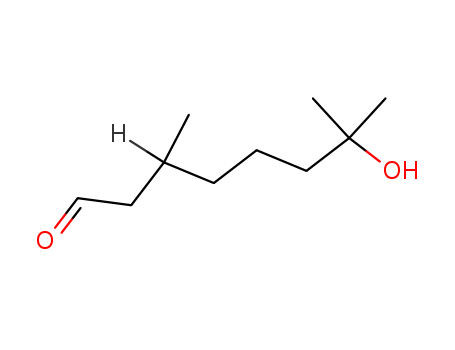
Offer Chemical Raw Material 3,7-Dimethyl-7-hydroxyoctanal 107-75-5 In Stock
- Molecular Formula:C10H20O2
- Molecular Weight:172.268
- Appearance/Colour:clear colourless liquid
- Vapor Pressure:0.00318mmHg at 25°C
- Melting Point:19oC
- Refractive Index:1.445 - 1.450
- Boiling Point:251.6 °C at 760 mmHg
- PKA:15.31±0.29(Predicted)
- Flash Point:103.8 °C
- PSA:37.30000
- Density:0.912 g/cm3
- LogP:2.15270
3,7-Dimethyl-7-hydroxyoctanal(Cas 107-75-5) Usage
|
Preparation |
The most important synthetic routes to hydroxydihydrocitronellal are listed as follows. 1) Synthesis from citronellal: One of the oldest routes to hydroxydihydrocitronellal is the hydration of the citronellal bisulfite adduct (obtained at low temperature) with sulfuric acid, followed by decomposition with sodium carbonate. A more recent development is hydration of citronellal enamines or imines, followed by hydrolysis. 2) Synthesis from citronellol. Citronellol is hydrated to 3,7-dimethyloctane-1,7- diol, for example, by reaction with 60% sulfuric acid. The diol is dehydrogenated catalytically in the vapor phase at low pressure to give highly pure hydroxydihydrocitronellal in excellent yield.The process is carried out in the presence of, for example, a copper–zinc catalyst; at atmospheric pressure, noble metal catalysts can also be used. 3) Synthesis from 7-hydroxygeranyl/-neryl dialkylamine: The starting material can be obtained by treatment of myrcene with a dialkylamine in the presence of an alkali dialkylamide, followed by hydration with sulfuric acid. The 7-hydroxygeranyl/-neryl dialkylamine isomerizes to the corresponding 7-hydroxyaldehyde enamine in the presence of a palladium(II)- phosphine complex as catalyst. Hydrolysis of the enamine gives 7-hydroxydihydrocitronellal [151]. |
|
Flammability and Explosibility |
Notclassified |
|
Trade name |
Laurinal? (Takasago). |
|
Contact allergens |
Hydroxycitronellal is a classical fragrance allergen, found in many products. It is contained in “fragrance mix.” It has to be listed by name in the cosmetics of the EU. |
|
Safety Profile |
A skin irritant. Combustible liquid. When heated to decomposition it emits acrid smoke and irritating fumes. See also ALDEHYDES. |
|
Synthesis |
By hydration of natural citronellal obtained from Java citronella or from Eucalyptus citriodora; β-pinene is converted to myrcene, which on hydration may yield either linalool or mixture of geranoil and nerol; the latter mixture can be hydrogenated to citronellol and subsequently converted to citronellal and hydroxycitronellal; also by hydrogenation of 3,7-dimethyl-7-hydroxy-2- octen-2-al over palladium carbon in ethyl acetate solution. |
|
Definition |
ChEBI: The tertiary alcohol arising from addition of water across the C2C double bond of citronellal. |
|
Taste threshold values |
Taste characteristics at 50 ppm: sweet, waxy, green, floral and melon notes. |
InChI:InChI=1/C10H20O2/c1-9(6-8-11)5-4-7-10(2,3)12/h8-9,12H,4-7H2,1-3H3/t9-/m0/s1
107-75-5 Relevant articles
Green synthesis method of hydroxyl citronellal
-
Paragraph 0007; 0012-0018, (2021/11/21)
The invention discloses a green synthesi...
Efficient green synthesis method of hydroxycitronellal
-
Paragraph 0013; 0027; 0030-0032; 0035; 0038-0040; 0041; ..., (2021/06/26)
The invention discloses an efficient gre...
Preparation method of citronellal hydrate
-
Paragraph 0065; 0069; 0070; 0078; 0086; 0094; 0102, (2018/04/03)
The invention relates to a preparation m...
OXIDATION OF PRIMARY ALCOHOLS TO ALDEHYDES CATALYZED BY RUTHENIUM COMPOUNDS
Ogibin, Yu. N.,Ilovaiskii, A. I.,Nikishin, G. I.
, p. 99 - 105 (2007/10/02)
The RuCl3 and RuO2*nH2O catalyzed oxidat...
107-75-5 Process route
-
-
67-56-1
methanol

-

-
123366-53-0,1723-79-1
N-(3,7-dimethyl-1,6-octadienyl)-piperidine

-

-
106-23-0,26489-02-1
3,7-dimethyl-oct-6-enal
-

-
107-75-5
7-hydroxy-3,7-dimethyl-octanal
-

-
3613-30-7
7-methoxy-3,7-dimethyloctanal
| Conditions | Yield |
|---|---|
|
at 25 ℃;
for 3h;
Product distribution;
in function of quantity of methanol and sulphuric acid;
|
-
-
67-56-1
methanol
-

-
42822-94-6
N-(3,7-dimethyl-1,6-octadienyl)-morpholine
-
-
106-23-0,26489-02-1
3,7-dimethyl-oct-6-enal
-
-
107-75-5
7-hydroxy-3,7-dimethyl-octanal
-
-
3613-30-7
7-methoxy-3,7-dimethyloctanal
| Conditions | Yield |
|---|---|
|
at 25 ℃;
for 3h;
Product distribution;
in function of quantity of methanol and sulphuric acid;
|
107-75-5 Upstream products
-
2385-77-5

(R)-Citronellal
-
68797-68-2

7-hydroxy-3,7-dimethyloctanenitrile
-
67-56-1
methanol
-
123366-53-0
N-(3,7-dimethyl-1,6-octadienyl)-piperidine
107-75-5 Downstream products
-
18479-57-7

2,6-dimethyl-2-octanol
-
98206-63-4

7-hydroxycitronellol
-
90058-74-5

1-methyl-4-<(7-hydroxy-3,7-dimethyloctylidene)amino>benzene
-
90058-72-3

1-chloro-4-<(7-hydroxy-3,7-dimethyloctylidene)amino>benzene
Related Products
-
 2-Tetradecanone
CAS:2345-27-9
-
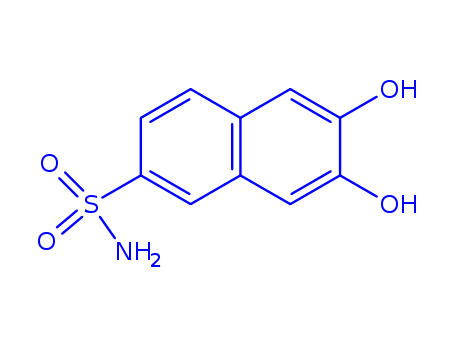 6,7-dihydroxynaphthalene-2-sulphonamide
CAS:54023-75-5
-
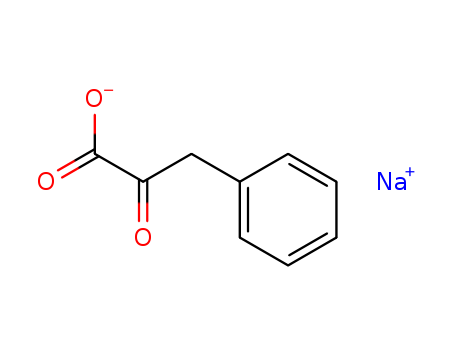 Sodium phenylpyruvate
CAS:114-76-1